ByJohn A
Why Is a Plastics Dryer Essential for High Quality Plastic Manufacturing?
Plastic manufacturing demands precision at every stage of the production process. Whether producing automotive components, medical devices, consumer products, packaging materials, or engineering plastics, maintaining consistent material quality is critical for achieving reliable production results. One of the most overlooked factors affecting plastic processing is moisture. Many plastic resins naturally absorb water from the surrounding environment, and if that moisture is not removed before processing, it can lead to product defects, reduced mechanical strength, poor surface finish, and inconsistent production quality. This is why investing in a reliable plastics dryer is essential for manufacturers working with moisture sensitive polymers. Advanced drying systems remove absorbed moisture before molding or extrusion begins, helping manufacturers improve product quality, increase production efficiency, and reduce costly material waste. Understanding the role of plastic drying technology enables businesses to select solutions that support long term operational performance while maintaining high manufacturing standards.
Why Does Moisture Affect Plastic Processing?
Many engineering plastics are hygroscopic, meaning they naturally absorb moisture from the atmosphere during storage and handling. Materials such as PET, nylon, polycarbonate, ABS, and several specialty polymers can absorb significant amounts of water before entering the manufacturing process. If this moisture remains inside the material during molding or extrusion, it may cause hydrolysis, material degradation, surface defects, bubbles, reduced strength, and dimensional instability.
Even small amounts of moisture can influence product quality. Manufacturers producing precision components often require strict control over every processing parameter, making proper resin drying an essential part of production preparation. Removing moisture before processing helps preserve the polymer’s physical properties while ensuring consistent manufacturing results.
In addition to improving product quality, proper drying reduces production interruptions caused by defective parts. Fewer rejected products translate into improved material utilization, lower manufacturing costs, and higher production efficiency across the facility.
Different Plastic Materials Have Different Drying Requirements
Every polymer requires specific drying temperatures, airflow, residence times, and moisture removal levels. Engineering plastics typically demand more precise drying conditions than commodity plastics. Selecting equipment capable of maintaining accurate drying parameters helps manufacturers process a wide variety of materials while maintaining consistent quality standards.
What Is a Plastics Dryer and How Does It Work?
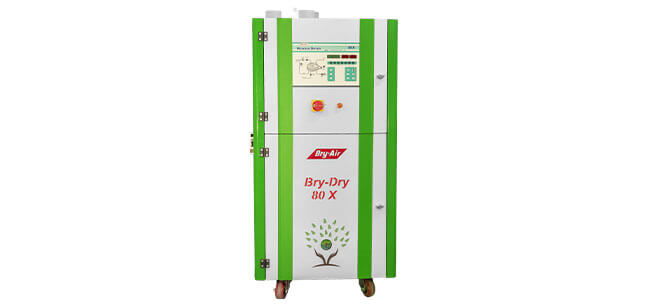
A plastics dryer is specialized equipment designed to remove absorbed moisture from plastic resins before they enter molding, extrusion, or other processing equipment. Unlike conventional heating methods that simply raise material temperature, industrial drying systems combine controlled heat with low humidity process air to remove moisture efficiently without damaging the material.
Modern drying systems use advanced desiccant technology to produce extremely dry air that passes through the resin hopper. As the dry air circulates around the plastic granules, moisture migrates from the material into the air stream and is removed from the system. This controlled drying process prepares the resin for consistent processing while preserving its mechanical and chemical properties.
Many advanced drying systems also include automated controls that monitor drying temperature, airflow, regeneration cycles, and operating conditions. These features improve process consistency while reducing operator intervention and improving energy efficiency.
Controlled Drying Protects Material Quality
Maintaining precise drying conditions is essential for preventing resin degradation while achieving complete moisture removal. Properly engineered drying systems deliver stable operating performance that supports consistent production quality across varying manufacturing conditions.
Why Are Desiccant Dryers for Plastics Preferred for Engineering Polymers?
Manufacturers processing hygroscopic resins often rely on desiccant dryers for plastics because they provide much lower humidity levels than conventional hot air drying systems. While heated air alone may remove surface moisture, it cannot effectively eliminate absorbed moisture within engineering polymers. Desiccant drying technology addresses this challenge by supplying extremely dry process air capable of extracting deeply absorbed water from the material.
Desiccant dryers maintain stable dew point conditions that allow consistent drying performance regardless of seasonal weather or surrounding humidity levels. This reliability is especially valuable in facilities operating year round under changing environmental conditions.
These systems also improve processing consistency by delivering properly dried resin to molding or extrusion equipment. Stable material quality reduces variations during production, allowing manufacturers to achieve tighter dimensional tolerances, improved mechanical performance, and better finished product appearance.
See also: How Businesses Measure Application Performance
Low Dew Point Air Improves Drying Efficiency
The ability to generate very dry process air distinguishes desiccant dryers from conventional systems. Lower humidity in the drying air increases moisture removal efficiency while supporting faster, more reliable drying across a wide range of engineering plastics.
What Should Manufacturers Consider When Selecting a Plastic Drying System?
Choosing the appropriate drying system requires careful evaluation of several operational factors. Resin type, production volume, processing temperature, drying time, hopper capacity, airflow requirements, and material handling systems all influence equipment selection. Every manufacturing operation has unique production requirements that should guide system design.
Energy efficiency is another important consideration because drying equipment often operates continuously. Modern desiccant drying systems incorporate energy saving technologies that optimize regeneration cycles, airflow management, and temperature control to reduce operating costs while maintaining effective moisture removal.
Automation capabilities also contribute to improved operational performance. Intelligent control systems simplify equipment operation, monitor process conditions, and provide consistent drying performance with minimal operator involvement. These features improve production reliability while reducing maintenance requirements.
Proper Equipment Sizing Improves Production Performance
Oversized or undersized drying systems may reduce efficiency or affect production quality. Professional engineering evaluations help manufacturers select drying equipment that matches production requirements while providing flexibility for future manufacturing expansion.
How Does Proper Resin Drying Improve Overall Manufacturing Efficiency?
Effective resin drying contributes directly to higher production quality, lower rejection rates, and improved operational efficiency. Properly dried materials process more consistently, reducing the likelihood of defects such as bubbles, silver streaks, brittleness, dimensional variations, or poor surface finish.
Improved product quality also reduces material waste and minimizes machine downtime associated with defective production runs. Stable processing conditions allow manufacturers to optimize cycle times while maintaining consistent product performance across large production volumes.
Reliable drying systems also help protect expensive processing equipment. Proper moisture removal reduces the risk of polymer degradation that may contaminate machinery or require additional cleaning and maintenance. Long term operational reliability improves when every stage of material preparation is carefully controlled.
Consistent Drying Supports Long Term Business Growth
Manufacturers seeking to improve productivity must focus on process stability as well as equipment performance. Reliable resin drying helps create predictable production conditions that support higher output, lower operating costs, and improved customer satisfaction through consistent product quality.
Conclusion
Plastic drying is a critical step in modern polymer processing that directly affects product quality, manufacturing efficiency, equipment reliability, and operational costs. Advanced desiccant drying technology provides manufacturers with the precise moisture control needed to process hygroscopic resins successfully while maintaining consistent production standards. Investing in a properly engineered plastic drying solution helps businesses reduce waste, improve product performance, and achieve long term manufacturing success.
Bry Air offers advanced plastic drying solutions designed to meet the demanding requirements of modern manufacturing industries. With decades of expertise in desiccant drying technology, customized engineering, and industrial process solutions, Bry Air helps manufacturers optimize material preparation and production efficiency. To discuss your application requirements or find the right drying solution for your facility, visit the Contact Us page and connect with the Bry Air team.