ByJohn A
A Skill Kids Learn Poolside That Shows Up in the Classroom Too
Teachers notice it before parents usually do. A kid who used to bounce between tasks without finishing any of them suddenly starts sticking with things longer. A kid who fell apart at the first sign of frustration starts trying again instead of giving up. Parents often trace it back to something at home or school, when really it was the pool the whole time. If you’ve been on the fence about surprise swim lessons for reasons beyond just teaching your child to swim, the discipline that comes with it might be the bigger payoff.
Swimming asks something of kids that a lot of other activities don’t. There’s no ball to chase, no teammate to lean on, no crowd cheering distraction. It’s just a kid, the water, and a task they have to work through on their own, over and over, until it clicks.
Repetition Teaches Patience in a Way Talking Never Does
You can tell a kid to be patient all day long and it won’t land the way actually practicing patience does. Swim lessons force repetition whether a child likes it or not. The same kick drill, the same arm motion, over and over until the body starts doing it without thinking.
That repetition is frustrating at first, especially for kids used to picking things up quickly in other areas. But sticking with something that doesn’t come easily right away, and doing it anyway, is exactly the muscle that builds real discipline. It’s not glamorous. It’s also one of the only ways that skill actually develops.
Parents sometimes ask why their child seems to handle frustration better after a few months of lessons than they did before. This is usually why. The pool doesn’t care how a kid feels about repeating a drill for the fifth time. It just requires them to keep going.
Following Instructions Without Constant Reminders
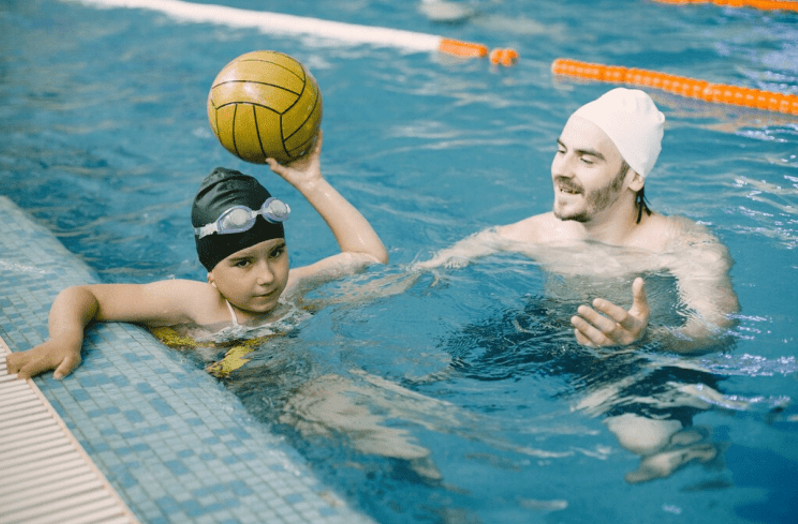
In a classroom, a kid gets multiple reminders before consequences show up. In the water, feedback is immediate. An instructor gives a cue, and a child either applies it or they don’t get the result they’re working toward, right then, not later.
That immediacy teaches kids to actually listen the first time, rather than waiting for a third or fourth repetition of the same instruction. Over time, that habit carries into other settings. Teachers and coaches in other activities often notice that kids with swim lesson experience pick up new instructions faster and need less repetition to apply them.
This isn’t magic. It’s just practice with a specific kind of feedback loop that a lot of other kids’ activities don’t offer in the same direct way.
Focus Gets Built in Short, Structured Bursts
A thirty-minute lesson is short enough that a young child can actually stay engaged the whole time, but structured enough that there’s no room for drifting off mentally the way there might be during a longer, less focused activity. That combination matters more than people realize.
Kids build focus the same way they build any other skill: through repeated, manageable practice, not by being told to concentrate harder. A lesson structure that keeps kids moving between drills without long dead time in between naturally trains that kind of sustained attention, just in shorter increments than a classroom setting typically asks for.
Some swimming programs scottsdale families use are built specifically around this kind of structured pacing, since instructors trained in working with young kids understand how to keep a lesson moving without losing a child’s attention halfway through.
Handling Failure Without Falling Apart
Kids fail constantly in swim lessons. They swallow water, they sink when they’re supposed to float, they lose their rhythm mid-stroke. None of that is treated as a big deal by a good instructor, and that matters more than it sounds like it should.
Watching an adult respond to a mistake calmly, rather than with frustration or over-the-top reassurance, teaches kids that mistakes are just part of learning something new. That’s a lesson a lot of kids don’t get consistently in other parts of their life, where failure sometimes gets either punished or smoothed over so much it doesn’t register as useful feedback at all.
Kids who spend a few years in swim lessons tend to handle setbacks in other areas with less drama. It’s not that swimming makes kids emotionally bulletproof. It’s that they’ve had regular, low-stakes practice with the specific experience of trying something, failing, adjusting, and trying again.
That repeated exposure to small, recoverable failure is genuinely rare in a lot of childhood activities. Video games often let kids restart instantly without processing the failure at all. Team sports sometimes bury an individual mistake inside a group result, so a child never has to sit with it directly. Swim lessons don’t offer that kind of cover. A missed stroke or a sunk float is right there, visible, and the only way through it is trying again. That directness is uncomfortable at first, but it’s also what makes the lesson stick.
Discipline Builds Faster With Consistency Than Intensity
A common mistake parents make is assuming more frequent or longer lessons will build discipline faster. That’s usually backwards. Kids build these habits through steady, manageable exposure over time, not through cramming.
A child attending a structured lesson every week, consistently, tends to develop stronger focus and follow-through than one attending intense daily sessions for a short burst and then stopping. The steady pace gives the brain time to actually absorb the habit, rather than just performing it under pressure for a few weeks and then losing it once the intensity stops.
This is worth keeping in mind if you’re weighing options for your child. Consistency matters more than volume, and a program built around steady weekly progress will generally build these habits more reliably than one focused on packing in as much practice as possible in a short window.
See also: How Businesses Implement FinOps Practices
What Parents Can Reinforce Outside the Pool
The habits swim lessons build don’t stay in the water unless they get reinforced elsewhere too. Simple things help: giving your child one instruction at a time instead of several at once, letting them work through small frustrations before stepping in, and noticing effort rather than just results.
None of that requires major changes at home. It’s mostly about paying attention to the same patterns instructors are already reinforcing at the pool and not accidentally undoing them the rest of the week.
If you’re curious about how a structured lesson program might fit your child’s specific personality and current attention span, it helps to talk it through with someone who works with kids at that stage regularly. You can reach out us to ask what a realistic lesson pace looks like and how instructors approach building these habits with kids your child’s age.
Discipline and focus aren’t things most parents expect to get out of swim lessons. They show up anyway, quietly, built through the same repetition and structure that teaches a child to swim in the first place. That’s part of what makes swimming different from a lot of other kids’ activities. The skill you’re paying for isn’t the only one your child walks away with.